Virtual Cards: Definition, How They Work, and Benefits in Digital Payments

NezenX Team
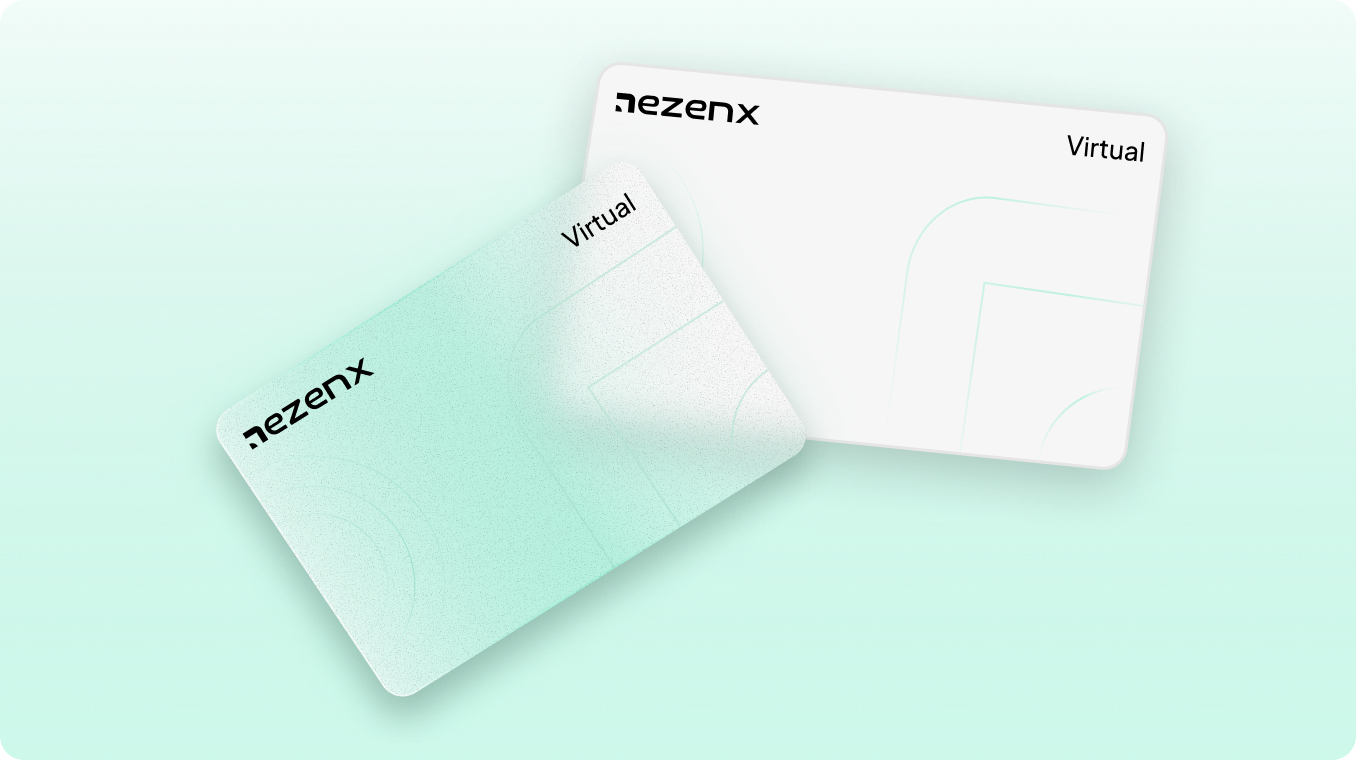
The rapid growth of e-commerce, subscription payments and in-app transactions has reshaped online spending habits. Against this backdrop, the virtual card has emerged as a modern digital payment method issued by banks and financial institutions, flexibly offering individuals and businesses a secure and efficient way to make transactions.
What Is a Virtual Card?
Virtual card is a payment card that exists solely as electronic data, comprising a 16-digit card number (Primary Account Number, or PAN), an expiration date, and a CVV or CVC security code. Because it involves no physical card, it is optimized for online purchases and can be added directly to digital wallets for contactless payments at the point of sale.
From a technical infrastructure and control standpoint, virtual cards fall into two core categories:
- Dynamic / single-use virtual cards: Card details are automatically invalidated once the transaction is completed, fully eliminating the risk of data exposure in one-off online payments.
- Static multi-use virtual cards / ghost cards (multi-use / merchant-locked virtual cards): These remain valid on a standing basis or are assigned to a specific merchant, making them an ideal solution for recurring spend, software subscriptions and business budget management.
Virtual Card Process and Technical Mechanics
The entire operating process of a virtual card relies on a series of automated, closed-loop steps that links the card directly to the cardholder's main bank account or funding source:
Step 1: Card creation and limit setup
The card is created directly in the financial service provider's app or website, allowing the cardholder to set spending limits, validity periods, or restrictions on eligible merchant categories based on Merchant Category Codes (MCCs).
Step 2: Payment data transmission
The core card credentials, namely the card number, expiration date and CVV, are are transmitted to the payment gateway used by the merchant.
Step 3: Authorization via international card networks
The transaction request is immediately routed through international card networks such as Visa or Mastercard to the issuing bank, which checks the available balance and applicable security rules.
Step 4: Settlement and automated posting
Once the transaction is approved, the amount is debited directly from the linked account and automatically posted to the transaction history under the corresponding card number.
The card's validity period is managed flexibly according to its intended use. A single-use card expires automatically once the intended payment has been completed. A multi-use card remains active until the expiration date shown on the card, unless it is frozen or cancelled earlier.
Core Benefits of Virtual Cards for Individuals and Organizations
Beyond how they operate, virtual cards deliver clear benefits in convenience and security for financial management:
Convenience
Users can create a card and use it right away in the app, without waiting for a physical card, and can freeze or cancel it at any time. For organizations, issuing dedicated cards to employees allows expenses to be charged directly to the company account, completely eliminating the need for out-of-pocket spending and file reimbursement claims afterward.
Safety and security
Merchants receive only the virtual card details, so the underlying account number is never shared. If the card details are compromised, the cardholder only needs to deactivate that specific card, without affecting the main account or any other cards. With no physical card involved, the risk of loss or theft is eliminated entirely.
Spend control
Virtual cards allow individual limits to be set on the maximum amount and validity period, or restrict use to a single merchant. Transactions that exceed a hard spending cap are automatically declined before they go through. Every payment is recorded against the specific card number used, making expense tracking and cash flow reconciliation extremely straightforward.
Criteria for Choosing a Virtual Card Solution
Although both individual online shoppers and businesses with dozens of employees paying suppliers can use virtual cards, the two groups have distinctly different requirements for management features. Choosing a solution that fits actual spending needs is therefore the deciding factor.
Before implementation, individuals or organizations can assess their options by asking the following questions:
- Can cards be created and used immediately in the app, or is an application review required first?
- Can limits, validity periods and permitted merchants be set for each card individually?
- Which currencies can the card be used to pay in, and what are the foreign exchange (FX) conversion fees?
- Are transactions displayed in real time, and can reports be exported per card?
For businesses, additional criteria include approval workflows for spending limits, permissions for issuing cards to employees, and automated reconciliation tools for the accounting team.
Answers to these questions typically point in one of two directions, and we currently offer solutions for both:
- Where payments are made mainly online, such as software subscriptions, shopping or fees for overseas services, NezenX Virtual Cards can be created directly in the app. Each card has its own limit, can be frozen at any time, and is linked to a multi-currency account, making foreign-currency payments more streamlined.
- Where spending across multiple people needs to be managed at once, NezenX Corporate Cards support assigning a dedicated card to each employee, role-based approval of spending limits, and centralized expense tracking. As a result, the accounting team can reconcile spending without having to collect receipts for reimbursement claims.
Whether for personal spending or for managing a budget for an entire team, the best solution remains infrastructure that matches actual payment habits. Contact us for more information on features and pricing to choose the most suitable configuration.
* This article is provided for general informational purposes only and does not constitute professional advice of any kind.
We make reasonable efforts to provide complete and accurate information. The content reflects the sources available at the time of publication and may be updated as necessary.
You should conduct your own research or consult an appropriate professional before making decisions based on your specific needs.
By accessing and using this website, you agree to comply with our Terms of Service. Content on this website is owned by NezenX and is developed and reviewed in accordance with our Editorial Guidelines.