ACH Return Codes (R01–R85): Lookup Table & Nacha Regulations

NezenX Team
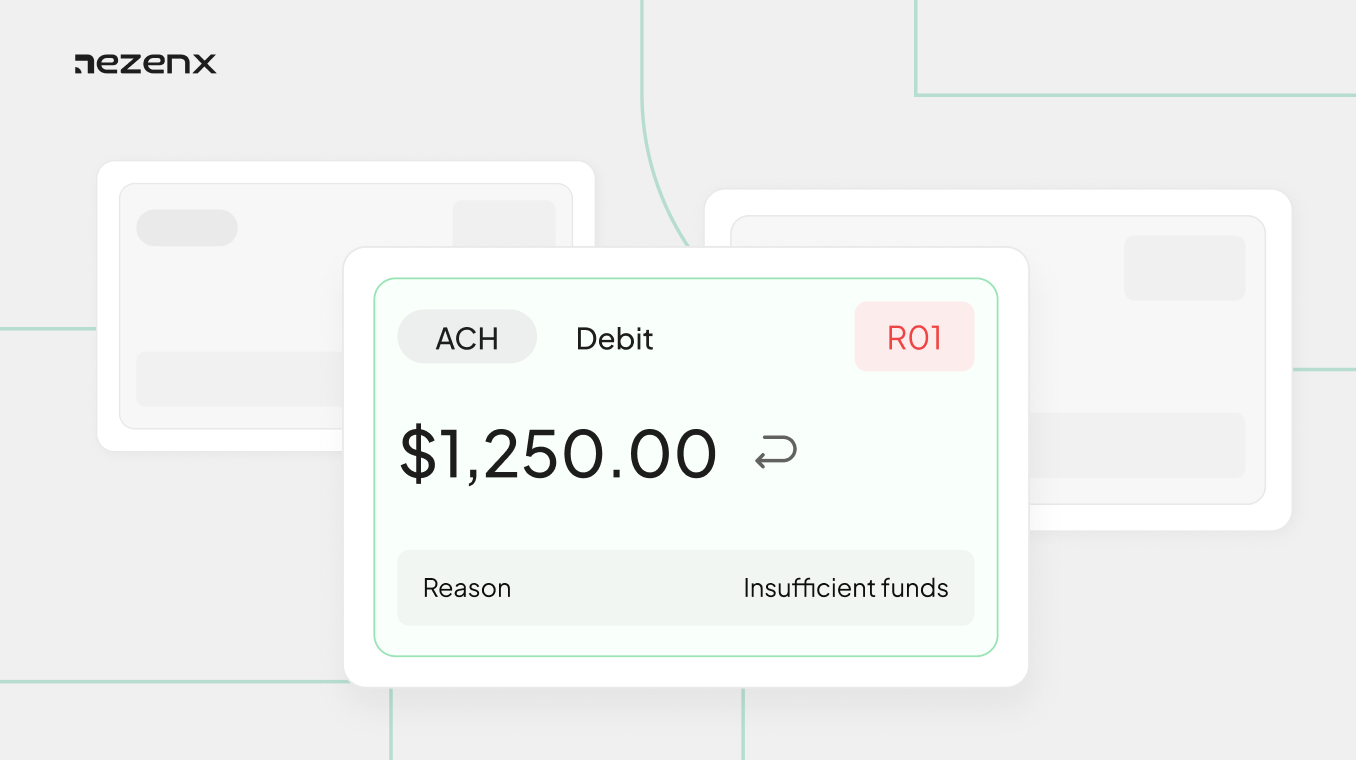
An ACH return code, officially known as a Return Reason Code under the Nacha Operating Rules, is a 3-character code consisting of “R” followed by two digits. It identifies why an ACH transaction could not be completed. Understanding the code helps businesses take the right action, control payment risk, and keep return rates below the limits monitored by Nacha.
How ACH Returns Work and Their Processing Timeframes
How ACH Return Codes Move Through the Network
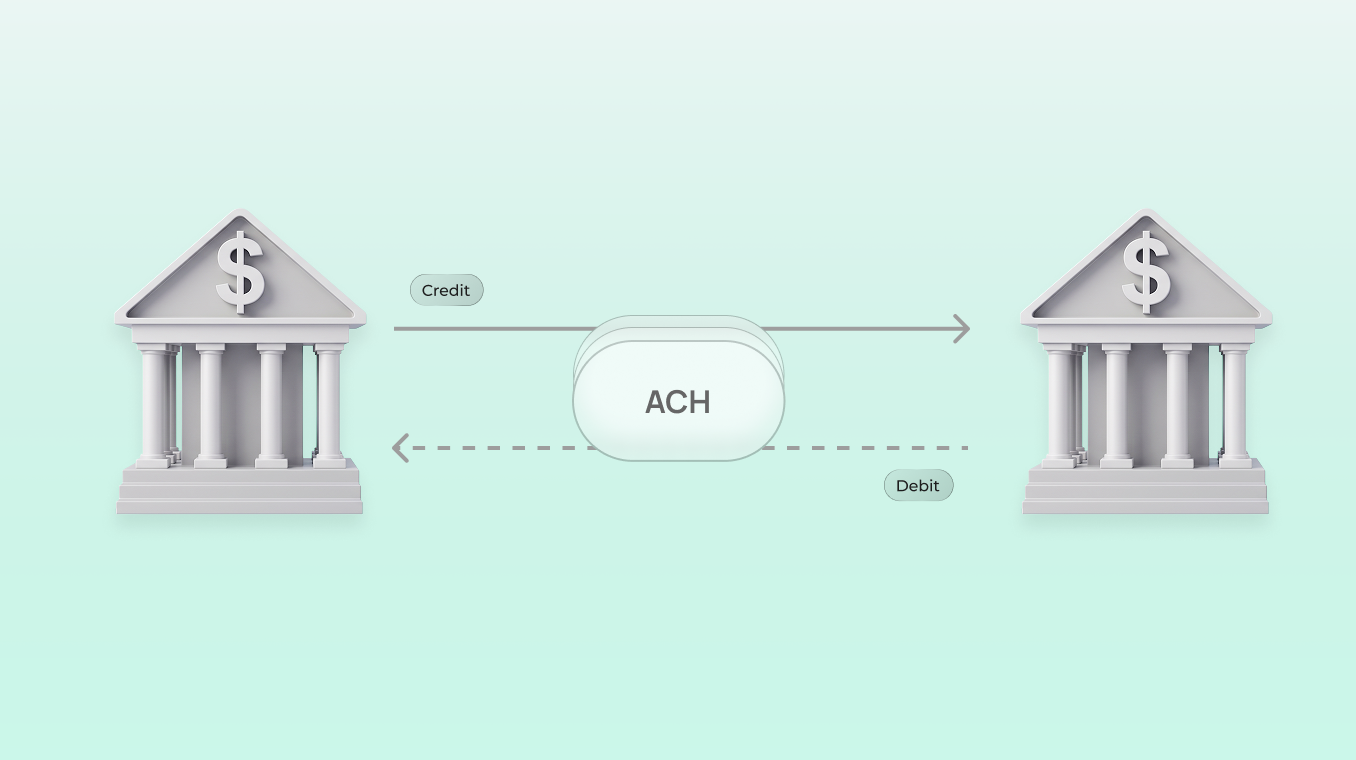
When a payment fails, a Return Entry travels back through the ACH clearing process in three main steps:
- The Receiving Depository Financial Institution (RDFI) creates a Return Entry with the appropriate code for a reason permitted under Nacha rules, such as an inability to post the entry, a claim from the Receiver, or a return request from the Originating Depository Financial Institution (ODFI).
- The ACH Operator routes the Return Entry back to the ODFI.
- The ODFI notifies the Originator that the entry has been returned and provides the code explaining why.
Most returns originate at the RDFI because it holds the Receiver’s account and has direct visibility into posting status and account-related disputes. However, not every entry reaches the RDFI. If the ACH Operator identifies a technical error, such as an invalid routing number (R13), it can reject and return the entry during processing.
The original Return Entry is not necessarily the final outcome:
- Dishonored Return: If the RDFI’s return is late, misrouted, or contains incorrect data, the ODFI may dishonor it using an applicable code in the R61–R70 range: R61, R62, or R67–R70. The applicable timeframe is five banking days after the Return Entry’s Settlement Date.
- Contested Dishonored Return: If the RDFI disagrees with the ODFI’s reason, it may contest the dishonored return using R71–R77. The applicable timeframe is 2 banking days after the dishonored return’s Settlement Date.
After this stage, the ACH Network provides no further automated return-processing step. The ODFI and RDFI must resolve any remaining dispute through negotiation or a process outside the network.
Return Timeframes Under Nacha Rules
Most return deadlines are measured from the original entry’s Settlement Date using one of two methods:
Banking days: Used for the standard 2-day return window and most other processing deadlines.
Calendar days: Used for the extended 60-day return window, primarily for unauthorized debits to consumer accounts and certain check-related returns.
These methods produce substantially different return windows.
Standard and Administrative Returns
Most return codes follow the standard window of 2 banking days after the original entry’s Settlement Date. Common examples include R01, R02, R03, and R04. If no return occurs within that window, the transaction has passed the standard return period.
Some codes follow different timing rules. For R23, the clock starts when the RDFI receives the Receiver’s refusal notice. R06 and R31 have no fixed return deadline because the return depends on an ODFI request or agreement.
Unauthorized Returns
The extended window covers claims involving unauthorized debits to consumer accounts, including R05, R07, R10, and R11. For these codes, the RDFI has a 60-calendar-day return window measured from settlement and must obtain a Written Statement of Unauthorized Debit (WSUD) signed by the account holder.
R29 also concerns an unauthorized debit, but it applies to business accounts and follows the standard 2-banking-day window.
A debit to a consumer account can therefore remain exposed to a return for approximately 2 months after the funds appear to have arrived. Comparable unauthorized-debit returns involving business accounts generally follow a much shorter timeline.
ACH Return Code Lookup (R01–R85)
Common categories of ACH Return issues include:
1. Financial and Balance Issues
Applicable codes: R01, R09
These returns occur when the Receiver’s account has insufficient available funds or funds have not yet become available when the debit is due to settle.
Under the Nacha Operating Rules, the Originator may reinitiate the entry up to twice within 180 days of the original entry’s Settlement Date. However, payment processors and finance practitioners recommend completing retries within 30 days to improve collection prospects and reduce the risk of customer disputes.
2. Account Data and Identification Issues
Applicable codes: R02, R03, R04, R12, R14, R15, R16, R20, R22
These returns arise from incorrect account information, closed or frozen accounts, accounts transferred to another financial institution, or the death of an account holder. Before initiating another transaction, the Originator must verify the account details with the Receiver and update them as needed.
3. Debit Authorization Disputes
Applicable codes: R05, R07, R08, R10, R11, R29, R51
These codes cover revoked authorizations, stop-payment requests, and disputed payments. The Originator must resolve the reason for the return with the customer before attempting another debit.
Most codes in this group (R05, R07, R10, R11, R29, and R51) count toward the 0.5% unauthorized return threshold. R08 follows the standard 2-banking-day window and counts toward the 15% overall return rate level, but not the 0.5% unauthorized threshold.
4. Refused Credit Entries
Applicable code: R23
R23 applies when the Receiver refuses a credit entry, for example because the amount is incorrect, a legal dispute exists, or the Receiver does not recognize the source of the payment.
5. Technical and File Formatting Errors
Applicable codes: R13, R17, R18, R19, R21, R24, R25, R26, R27, R28
These codes primarily concern file structure, routing numbers, amount-field formatting, and duplicate entries identified during preprocessing. Most are detected and handled by the ACH Operator or ODFI at the next file delivery, before reaching the RDFI.
The Originator must not resubmit an unchanged entry. It must work with the ODFI or payment gateway provider to review and correct the affected fields before submitting a new transaction.
6. Returns for Specialized Entry Classes
Applicable codes:
- International ACH Transactions (IAT): R80–R85.
- Check-related entries (RCK, ARC, BOC, XCK): R30, R33, R37, R38, R39, R50, R52, R53.
- Federal agency enrollment entries (ENR): R40–R47.
- Restricted entries or participation: R32, R34, R35, R36.
- Returns requested or agreed to by the ODFI: R06, R31.
These codes apply to specialized entry classes identified by a Standard Entry Class (SEC) code or to return arrangements between financial institutions. Resolution depends on the requirements for the entry type, such as OFAC sanctions requirements for IAT entries or check-image requirements for check-related entries.
7. ODFI and RDFI Interbank Processing
Applicable codes:
- Dishonored Returns initiated by the ODFI: R61, R62, R67, R68, R69, R70.
- Contested Dishonored Returns initiated by the RDFI: R71, R72, R73, R74, R75, R76, R77.
These codes support reconciliation and the resolution of technical disputes between participating financial institutions. They are not initiated directly by individual or business customers.
ACH Return Code Reference Table
*2 banking days: The return must reach the ODFI no later than the opening of business on the second banking day after the original entry’s Settlement Date.
**60 calendar days: The return must reach the ODFI no later than the opening of business on the banking day following the 60th calendar day after the original entry’s Settlement Date.
| Return code | Return reason | Cause | Applicable timeframe |
|---|---|---|---|
| R01 | Insufficient Funds | Available funds are insufficient to cover the debit. | *2 banking days |
| R02 | Account Closed | A previously active account has been closed by the account holder or RDFI. | *2 banking days |
| R03 | No Account/Unable to Locate Account | The account number structure is valid and it passes the check digit validation, but the account number does not correspond to the individual identified in the entry, or the account number designated is not an existing account. | *2 banking days |
| R04 | Invalid Account Number Structure | The account number has an invalid structure or fails format validation. | *2 banking days |
| R05 | Unauthorized Debit to Consumer Account Using Corporate SEC Code | A consumer account was debited using a corporate SEC code without the account holder’s authorization. | **60 calendar days |
| R06 | Returned per ODFI’s Request | The ODFI requested the return, and the RDFI agreed. | No fixed deadline |
| R07 | Authorization Revoked by Customer | The Receiver revoked the authorization previously granted to the Originator. | **60 calendar days |
| R08 | Payment Stopped | The Receiver requested a stop payment on the debit. | *2 banking days |
| R09 | Uncollected Funds | The account balance is sufficient, but some funds are not yet available. | *2 banking days |
| R10 | Customer Advises Originator is Not Known to Receiver and/or Originator is Not Authorized by Receiver to Debit Receiver’s Account | The Receiver does not recognize the Originator or did not authorize it to debit the account. | **60 calendar days |
| R11 | Customer Advises Entry Not in Accordance with the Terms of the Authorization | Authorization exists, but the entry does not follow its terms, such as the agreed amount or date. | **60 calendar days |
| R12 | Account Sold to Another DFI | The account has been transferred to another financial institution. | *2 banking days |
| R13 | Invalid ACH Routing Number | The routing number is invalid or does not identify a financial institution participating in the ACH Network. | Next file delivery time following processing |
| R14 | Representative Payee Deceased or Unable to Continue in That Capacity | The representative payee has died or can no longer act in that role. | *2 banking days |
| R15 | Beneficiary or Account Holder (Other Than a Representative Payee) Deceased | The beneficiary or account holder has died. | *2 banking days |
| R16 | Account Frozen/Entry Returned per OFAC Instruction | Access to the account is restricted due to specific action taken by the RDFI or by legal action; or OFAC has instructed the RDFI or Gateway to return the Entry. This code can be used to return both debits and credits. | *2 banking days |
| R17 | File Record Edit Criteria/Entry with Invalid Account Number Initiated Under Questionable Circumstances/Return of Improperly-Initiated Reversal | The RDFI cannot process the entry data or suspects questionable or fraudulent activity. | *2 banking days |
| R18 | Improper Effective Entry Date | The entry’s Effective Entry Date is invalid. | Next file delivery time following processing |
| R19 | Amount Field Error | The amount field is incorrectly formatted or invalid. | Next file delivery time following processing |
| R20 | Non-Transaction Account | The account type does not permit this type of entry. | *2 banking days |
| R21 | Invalid Company Identification | The Company Identification in the entry is invalid. | *2 banking days |
| R22 | Invalid Individual ID Number | The Receiver reports that the individual identification number in the entry is incorrect. | *2 banking days |
| R23 | Credit Entry Refused by Receiver | The Receiver refuses the credit entry. | Opening of business on the second banking day after the RDFI receives the refusal notice |
| R24 | Duplicate Entry | The entry duplicates an entry previously received. | *2 banking days |
| R25 | Addenda Error | The addenda record indicator, type code, or sequence number is wrong. | Next file delivery time following processing |
| R26 | Mandatory Field Error | A required field is missing or contains invalid data. | Next file delivery time following processing |
| R27 | Trace Number Error | The trace number in the entry or addenda record is invalid. | Next file delivery time following processing |
| R28 | Routing Number Check Digit Error | The routing number’s check digit is incorrect. | Next file delivery time following processing |
| R29 | Corporate Customer Advises Not Authorized | The business account holder reports that the debit was not authorized. | *2 banking days |
| R30 | RDFI Not Participant in Check Truncation Program | The RDFI does not participate in the check truncation program. | Next file delivery time following processing |
| R31 | Permissible Return Entry (CCD and CTX only) | A CCD or CTX entry is returned after the standard deadline with the ODFI’s agreement to accept it. | No fixed deadline |
| R32 | RDFI Non-Settlement | The RDFI cannot settle the entry. | Next file delivery time following processing |
| R33 | Return of XCK Entry | The RDFI returns an XCK entry representing a damaged or lost check processed through ACH. | **60 calendar days |
| R34 | Limited Participation DFI | A regulator has restricted the RDFI’s participation in the ACH Network. | Next file delivery time following processing |
| R35 | Return of Improper Debit Entry | The debit is not permitted, such as a CIE debit or a debit to a loan account. | Next file delivery time following processing |
| R36 | Return of Improper Credit Entry | The credit is not permitted, such as a credit using a debit-only SEC code: ARC, BOC, POP, RCK, TEL, or XCK. | Next file delivery time following processing |
| R37 | Source Document Presented for Payment | R36, Return of Improper Credit Entry, The credit is not permitted, such as a credit using a debit-only SEC code: ARC, BOC, POP, RCK, TEL, or XCK., Next file delivery time following processing | **60 calendar days |
| R38 | Stop Payment on Source Document | A stop-payment order exists for the original check underlying an ARC or BOC entry. | **60 calendar days |
| R39 | Improper Source Document/Source Document Presented for Payment | The source document is ineligible for conversion or has already been paid. | *2 banking days |
| R40 | Return of ENR Entry by Federal Government Agency | The federal agency identified in the ENR entry does not participate in automated enrollment. | Not applicable (ENR) |
| R41 | Invalid Transaction Code | The transaction code is invalid (ENR). | Not applicable (ENR) |
| R42 | Routing Number/Check Digit Error | The routing number or check digit is incorrect (ENR). | Not applicable (ENR) |
| R43 | Invalid DFI Account Number | The account number is invalid (ENR). | Not applicable (ENR) |
| R44 | Invalid Individual ID Number/Identification Number | The identification number is invalid (ENR). | Not applicable (ENR) |
| R45 | Invalid Individual Name/Company Name | The individual or company name is invalid (ENR). | Not applicable (ENR) |
| R46 | Invalid Representative Payee Indicator | The representative payee indicator is invalid (ENR). | Not applicable (ENR) |
| R47 | Duplicate Enrollment | The enrollment is a duplicate (ENR). | Not applicable (ENR) |
| R48–R49 | Reserved | Not in use. | – |
| R50 | State Law Affecting RCK Acceptance | State law prevents the RDFI from accepting the RCK entry. | *2 banking days |
| R51 | Item Related to RCK Entry is Ineligible or RCK Entry is Improper | The original check is ineligible for RCK processing, or the RCK entry is improper. | **60 calendar days |
| R52 | Stop Payment on Item Related to RCK Entry | A stop-payment order exists for the original check underlying the RCK entry. | **60 calendar days |
| R53 | Item and RCK Entry Presented for Payment | Both the original check and the RCK entry have been presented for payment. | **60 calendar days |
| R54–R60 | Reserved | Not in use. | – |
| R61 | Misrouted Return | The Return Entry was sent to the wrong financial institution. | Five banking days after the Return Entry’s Settlement Date |
| R62 | Return of Erroneous or Reversing Debit | The ODFI dishonors a return involving an erroneous or reversing debit that resulted in an unintended credit to the Receiver. | Five banking days after the Return Entry’s Settlement Date |
| R63–R66 | No Longer Used | Consolidated into R69. | – |
| R67 | Duplicate Return | The Return Entry is duplicated. | Five banking days after the Return Entry’s Settlement Date |
| R68 | Untimely Return | The Return Entry was submitted after the applicable deadline. | Five banking days after the Return Entry’s Settlement Date |
| R69 | Field Error(s) | One or more fields in the Return Entry contain errors. | Five banking days after the Return Entry’s Settlement Date |
| R70 | Permissible Return Entry Not Accepted/Return Not Requested by ODFI | The RDFI used R06 or R31 without an ODFI request or agreement. | Five banking days after the Return Entry’s Settlement Date |
| R71 | Misrouted Dishonored Return | The dishonored return was sent to the wrong financial institution. | 2 banking days after the dishonored return’s Settlement Date |
| R72 | Untimely Dishonored Return | The dishonored return was submitted after the applicable deadline. | 2 banking days after the dishonored return’s Settlement Date |
| R73 | Timely Original Return | The RDFI maintains that the original return was submitted on time. | 2 banking days after the dishonored return’s Settlement Date |
| R74 | Corrected Return | The RDFI corrects the data in the dishonored Return Entry. | 2 banking days after the dishonored return’s Settlement Date |
| R75 | Return Not a Duplicate | The RDFI maintains that the Return Entry is not a duplicate. | 2 banking days after the dishonored return’s Settlement Date |
| R76 | No Errors Found | The RDFI maintains that the Return Entry does not contain the errors identified by the ODFI. | 2 banking days after the dishonored return’s Settlement Date |
| R77 | Non-Acceptance of R62 Dishonored Return | The RDFI does not accept an R62 dishonored return, for example because it returned both the erroneous entry and the reversal, or could not recover funds from the Receiver. | 2 banking days after the dishonored return’s Settlement Date |
| R78–R79 | Reserved | Not in use. | – |
| R80 | IAT Entry Coding Error | The IAT entry is incorrectly coded. | *2 banking days |
| R81 | Non-Participant in IAT Program | The Gateway has no agreement with the ODFI or the Gateway’s customer to transmit the IAT entry. | *2 banking days |
| R82 | Invalid Foreign Receiving DFI Identification | The foreign financial institution’s identification is invalid. | *2 banking days |
| R83 | Foreign Receiving DFI Unable to Settle | The IAT entry is returned because of a settlement problem in the foreign payment system. | *2 banking days |
| R84 | Entry Not Processed by Gateway | The Gateway Operator declines to process an outbound IAT entry because of excessive risk or because the foreign payment system does not support a required function. | *2 banking days |
| R85 | Incorrectly Coded Outbound International Payment | An outbound international payment uses a SEC code that omits information the Gateway needs for OFAC compliance. | *2 banking days |
ACH Return Rate Thresholds and Levels
Nacha monitors three return rates for an Originator’s debit entries. These rates are based on transaction counts rather than dollar value and are measured over the preceding 60 days or 2 calendar months.
Nacha calls the 0.5% figure a threshold and the 3% and 15% figures levels. This distinction determines what happens when each is exceeded.
Calculation
Return rate = (Number of debit entries returned under the relevant codes ÷ Total debit entries originated during the same period) × 100%
Unauthorized Return Threshold
Nacha sets the threshold at 0.5% for debit entries returned with R05, R07, R10, R11, R29, or R51.
R11 counts toward this rate even though authorization exists, because the entry does not follow its terms—for example, the amount is incorrect or the debit occurs earlier than agreed.
Administrative Return Rate Level
Nacha sets a 3% level for debit entries returned because of administrative or account-data errors, covering R02, R03, and R04.
Overall Return Rate Level
The overall level is 15%, covering debit entries returned for any reason. RCK entries and RCK returns may be excluded from both the numerator and denominator when calculating this rate.
What Happens When These Limits Are Exceeded
Exceeding the 0.5% threshold immediately triggers reporting and return-rate reduction obligations for the ODFI. The ODFI must work directly with the Originator or Third-Party Sender—an intermediary that transmits entries on another party’s behalf—to bring the rate below the threshold.
Nacha reviews the results within 30 days, continues monitoring for another 180 days, and may initiate an enforcement proceeding if the rate does not improve.
Exceeding the 3% or 15% level does not automatically constitute a violation. Instead, it provides a starting point for a Nacha inquiry into whether the entity’s origination practices contribute to excessive returns and warrant a reduction.
Best Practices for Preventing and Reducing ACH Returns
Businesses originating ACH debits can use the following measures to help reduce administrative and unauthorized returns.
Instant Account Verification / Micro-deposits: Check that the account is valid and active before initiating the first debit. Originators can use an instant verification service or send small deposits for the Receiver to confirm, helping reduce returns such as R02, R03, and R04. For WEB debits to consumer accounts, Nacha requires account validation before first use and whenever the account number changes.
Prenote Transactions: Send a zero-dollar entry so the RDFI can check the account number before an actual payment is initiated. If the details are incorrect, the prenote is returned with R02, R03, or R04, allowing the issue to be addressed before a live entry is submitted. The first live entry may be initiated only after at least 3 banking days have elapsed from the prenote’s Settlement Date.
Dual Account Entry: Ask customers to enter their account number twice so the system can compare both entries and catch typing errors that could lead to R03 or R04. This checks for input errors and does not replace account validation.
Proof of Authorization: Retain evidence of authorization appropriate to the entry type for at least 2 years after the authorization terminates or is revoked. These records should be available promptly when requested by the ODFI, particularly when the Receiver disputes the debit as unauthorized.
Statement Descriptors: Use a recognizable business name in the Company Name field and a clear transaction description so the Receiver can identify the payment. Failure to recognize the collecting party is a common reason for R10 returns.
These measures apply when a business originates debits. Businesses can also encounter returns in 2 other operational roles.
When receiving payments from U.S. partners, a business needs to provide its routing number, local account number, and beneficiary name so the partner can initiate an ACH payment. Incorrect account details or a beneficiary name that does not match the account holder's name can lead to returns such as R03 or R04 and disrupt cash flow.
Global Account provides access to local account details in major currencies, including USD, in the business’s name through licensed partners. When the account name matches the name on contracts and invoices, partners can use the information already in their records, helping reduce discrepancies from the first transfer.
A business may also be the party whose account is debited, for example, when a software provider or advertising platform collects its fees. An R01 return caused by insufficient funds in a shared account can put service continuity at risk. To stop a debit, the business must notify the provider to revoke the authorization or ask its bank to place a stop-payment order, which may result in R08.
To optimize operations, the business can separate these expenses using dedicated virtual cards for each vendor or campaign. Each card can have its own spending limit and can be locked when needed without affecting spending on other cards.
Conclusion
Each ACH return code helps answer three practical questions: why the transaction failed, what to do next, and whether the return affects a Nacha monitoring rate.
Understanding return codes, observing response deadlines, and keeping return rates below the applicable limits help businesses manage ACH payment risk. As an Originator, a business can prevent many errors through account validation, prenotes, and proper authorization records. As a Receiver, it can help partners send payments correctly from the outset by providing consistent beneficiary details.
Even with preventive measures in place, an ACH receipt can still be returned or delayed while card expenses, such as advertising budgets and software fees, fall due. Smart Funding supports flexible funding of card-spending balances from multiple sources, including fiat currencies and supported stablecoins such as USDC and USDT. This helps businesses keep recurring card expenses funded without relying entirely on a single source of incoming payments.
* This article is provided for general informational purposes only and does not constitute professional advice of any kind.
We make reasonable efforts to provide complete and accurate information. The content reflects the sources available at the time of publication and may be updated as necessary.
You should conduct your own research or consult an appropriate professional before making decisions based on your specific needs.
By accessing and using this website, you agree to comply with our Terms of Service. Content on this website is owned by NezenX and is developed and reviewed in accordance with our Editorial Guidelines.