What Is SWIFT? An Overview of the Global Interbank Messaging Network

NezenX Team
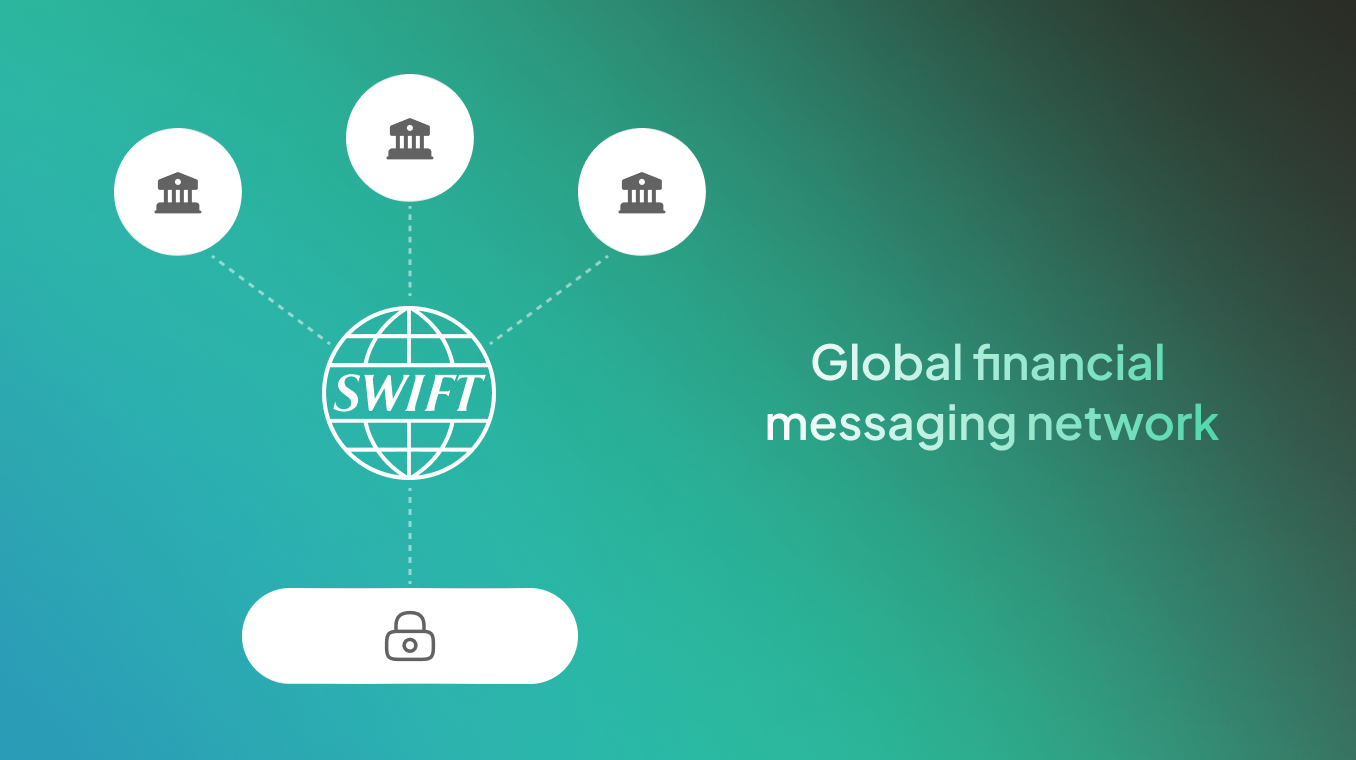
SWIFT is a global financial messaging network that banks and financial institutions use to exchange transaction information securely. Its messages follow standardized formats, allowing banks in different countries to understand and process each other’s instructions.
SWIFT plays a role in many international transfers, from money sent to family abroad to payments between business partners in different countries. Beyond banks, the network also connects payment systems and large corporations, making it an important communication channel in global finance.
Understanding how SWIFT works helps explain why an international transfer can take several days, incur intermediary fees or require additional information.
The Definition and Role of SWIFT
SWIFT’s Full Name and Legal Structure
SWIFT stands for Society for Worldwide Interbank Financial Telecommunication. Banks established it in 1973 to standardize the exchange of financial information and replace Telex, a communication method that was slow and prone to errors.
SWIFT is headquartered in Belgium and operates as a cooperative under Belgian law. Its shareholders own and control the organization. Given SWIFT’s central role in global finance, the National Bank of Belgium (NBB) leads its oversight in close cooperation with the central banks of the G10. Their oversight focuses on risk management, information security and the stability and continuity of the system.
SWIFT as a Messaging Network, Not a Payment or Settlement System
Because people often associate SWIFT with international transfers, many assume that the network directly moves money. In fact, it is a financial messaging rail that acts like a postal service, delivering instructions between banks. SWIFT does not hold customer funds, open personal accounts or directly clear and settle transactions.
In a cross-border payment, a SWIFT message carries details such as the sender, recipient, currency, amount and beneficiary bank. The participating banks use this information to process the transaction and take the steps needed to credit the recipient’s account.
Beyond payments, financial institutions also use the network to exchange information about securities, treasury management and foreign exchange transactions.
The Core Components of the SWIFT Network
SWIFT/BIC Codes: Identifying Financial Institutions
A Business Identifier Code (BIC), often called a SWIFT code, is an 8- or 11-character code that identifies an organization in a financial transaction. SWIFT assigns these codes under the ISO 9362 standard.
In an international transfer, a BIC works like the address of the beneficiary’s bank. The account number or IBAN identifies the account where the funds should be credited. This is why international transfer forms usually ask the sender for both details.
ISO 20022: A Standard for Financial Messages
Once the sending bank identifies the receiving bank, the parties need to interpret the payment information consistently. ISO 20022 is an international standard that defines how data is structured in financial messages.
SWIFT has moved cross-border payment instructions from the traditional MT format to ISO 20022 messages, which use XML to structure data. This format places details such as names, addresses and payment amounts in clearly defined fields, making them easier for banks to process and check.
For senders and recipients, the move to ISO 20022 does not change their everyday payment process. However, more complete and clearly structured data can help reduce delays caused by banks requesting additional information or verification.
SWIFTNet and the Customer Security Programme
SWIFTNet is SWIFT’s core messaging platform. It enables participants to exchange financial messages and data files over a secure private network.
The platform uses several measures to protect information during transmission. Encryption protects message contents from unauthorized access, authentication verifies the identity of the communicating parties, and digital signatures help recipients check the origin of a signed message and detect changes to its contents.
Protecting the connection, however, is only part of the challenge. If attackers compromise a bank’s systems or obtain its login credentials, they can misuse its SWIFT connection to send instructions in the bank’s name.
This is what happened in 2016, when attackers compromised Bangladesh Bank’s SWIFT-connected environment and sent fraudulent payment instructions. Following the incident, SWIFT launched the Customer Security Programme (CSP) to strengthen security across participants’ local environments.
The CSP sets mandatory and advisory security controls, including measures for system protection and access management. Participants must regularly assess and attest to their compliance with the mandatory requirements that apply to them.
How a SWIFT Transaction Is Processed
The Three Stages of a SWIFT Payment
When a customer sends money internationally, the sending bank uses SWIFT to transmit payment instructions to the banks involved. The process generally follows three stages:
Step 1 – The sending bank creates a message: The customer provides the recipient’s details, account number, receiving bank’s SWIFT/BIC code and payment amount. The sending bank uses this information to create a message in SWIFT’s standard format.
Step 2 – The message travels through the network: If the sending and receiving banks have a direct relationship, the message goes straight to the receiving bank. Otherwise, it passes through one or more correspondent banks. Each bank in the chain reads the message, handles its part and forwards the instruction.
Step 3 – The receiving bank credits the account: The final bank in the chain checks the information and credits the beneficiary’s account.
How Nostro, Vostro and Loro Accounts Support Settlement
While SWIFT carries the instructions, money does not physically move across borders. Instead, banks transfer funds by debiting and crediting accounts they hold with partner banks.
The same correspondent account has three names, depending on which bank is referring to it:
- Nostro, meaning “ours” in Italian: “Our account with you.” The bank that owns the account uses this term to track its foreign currency account with a partner bank.
- Vostro, meaning “yours” in Italian: “Your account with us.” The bank that maintains the account uses this term to record its liability to the account-holding bank.
- Loro, meaning “theirs” in Italian: “Their account with another bank.” A third bank uses this term when referring to a correspondent account held between two other financial institutions.
Consider a bank in Singapore that opens a euro account with a correspondent bank in Europe:
- From the Singapore bank’s perspective (the account holder): It is a Nostro account (“our funds held with you”).
- From the European correspondent bank’s perspective (the account provider): It is a Vostro account (“your funds held with us”).
- From a third bank’s perspective (for example, a US bank referring to the Singapore bank’s EUR account with the European bank during an interbank transaction): It is a Loro account (“their account”).
When a Singapore business pays a European supplier in euros, the correspondent bank debits the Singapore bank’s Vostro account and arranges for the funds to reach the beneficiary’s account. Through these correspondent banking arrangements, banks can offer multi-currency payment services without opening a physical branch in every country.
SWIFT Payment Times, Costs and Improvements
Processing Times and Transaction Costs
A traditional international transfer through SWIFT generally takes one to five business days to complete. Processing time depends on the number of intermediary correspondent banks in the payment chain and each bank’s cut-off time.
In terms of costs, a SWIFT transaction involves multiple fee components across the sending, intermediary, and receiving banks. Three international codes determine how these charges are allocated: OUR means the sender pays all fees, SHA means the sender and recipient share them, and BEN means the recipient pays all fees.
When a transaction involves currency conversion, it can also incur a foreign exchange markup and face exchange rate fluctuations while the payment is being processed.
SWIFT gpi: Improving Speed and Transparency
SWIFT introduced gpi (Global Payments Innovation) to address the slow processing and limited visibility associated with traditional international transfers. Its core features include:
- End-to-end tracking: A Unique End-to-End Transaction Reference (UETR) lets banks and businesses track a payment through each stage of processing.
- Fee transparency: Participating banks can see the service fees deducted and exchange rates applied before the funds reach the destination account.
- Credit confirmation: The system sends confirmation when the beneficiary’s account receives the funds.
SWIFT gpi has significantly improved payment speed: 75% of payments reach the destination bank within 10 minutes.
Time Zones and Compliance Checks
Despite the improvements introduced by gpi, the time it takes to credit the recipient’s account still depends on two operational factors at each bank:
- Cut-off times and time zones: Each bank sets its own cut-off time for processing instructions. If an instruction arrives after the cut-off or on a weekend or public holiday, the bank processes it on the next business day.
- AML and sanctions screening: Payment instructions undergo automated anti-money laundering and sanctions checks. If a transaction raises concerns, the bank may hold the instruction for manual verification.
Structured XML data helps compliance systems screen information more accurately, but it cannot replace the mandatory legal checks required under central bank regulations.
Conclusion
SWIFT provides the financial messaging infrastructure, but it does not directly move money. The payment itself depends on the banks involved, each with its own processing times, fees and compliance requirements.
For businesses that regularly transact internationally, intermediary bank fees and currency conversion costs are only part of the challenge. Monitoring balances across different locations and reconciling incoming and outgoing payments can also make cash flow management more complex.
Global Account brings multi-currency balances and transactions together on one platform. Businesses can receive payments using local account details in supported markets, monitor activity and use balances in different currencies. This helps them reduce unnecessary conversions and plan international payments with greater control.
* This article is provided for general informational purposes only and does not constitute professional advice of any kind.
We make reasonable efforts to provide complete and accurate information. The content reflects the sources available at the time of publication and may be updated as necessary.
You should conduct your own research or consult an appropriate professional before making decisions based on your specific needs.
By accessing and using this website, you agree to comply with our Terms of Service. Content on this website is owned by NezenX and is developed and reviewed in accordance with our Editorial Guidelines.